
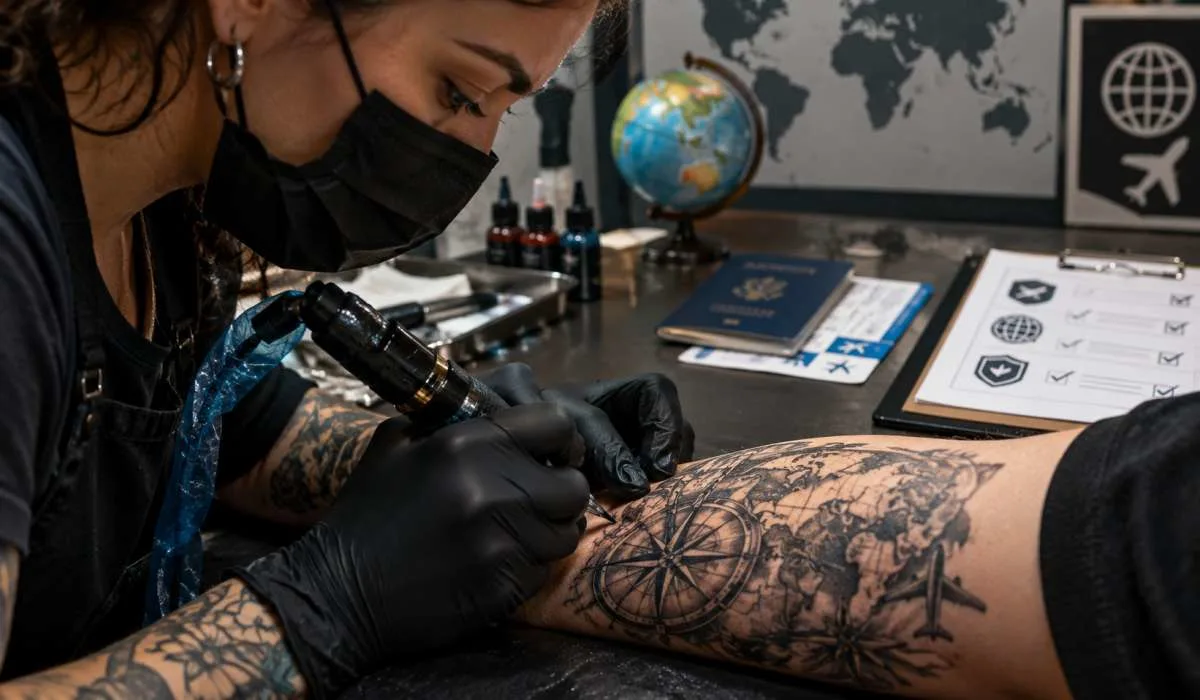
Strict tattoo laws can surprise travelers who assume that getting inked is legal everywhere. While tattoos are widely accepted in many countries, some nations have rules about who can perform tattooing, where tattoos can appear, what designs are allowed, and whether minors can get them.
Religious tattoos can also create problems in certain destinations, especially when sacred symbols are involved. In some places, the rules apply mainly to tattoo artists and studios, while travelers may face problems because of visible tattoos. From South Korea and China to Sri Lanka, Thailand, Iran, Germany and Spain, these rules show why checking local laws before getting inked abroad matters.
The Fine Print on Getting Inked Abroad
A tattoo has to be one of the most personal choices you can make, until someone at the border has their say. Some nations established a tattoo policy years ago on some areas of your body that they don't want tattooed and never updated it. Others simply ignore the tattoo and make life difficult for the artist. A few give a shrug, a couple send you on a detention flight, but reading up beforehand is better than a trip to the airport.
South Korea
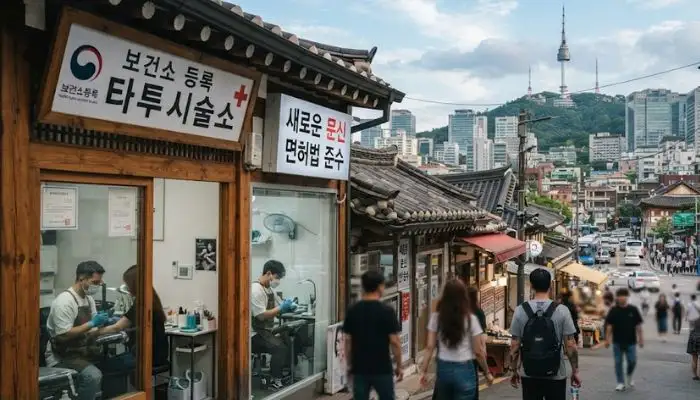
In 1992, the Supreme Court declared tattooing a medical act, requiring only licensed physicians to practice. Artists faced fines of up to 50 million won, or 38,300 dollars, and jail time, while K-pop idols flaunted their sleeve tattoos on national TV. Parliament passed the Tattooist Act in September 2025, but a licensing regime will not launch until October 2027.
Read More:20 of Historys Strangest Plane Disappearances That Remain Unsolved
China
In May 2022, the State Council banned all businesses and individuals in the country from tattooing minors under 18 years old, with no exemptions for parental consent. The instruction also included any promotion or publication that could tempt minors to get themselves tattooed. Authorities had previously ordered the national football team to conceal or remove existing tattoos.
Vietnam
Getting a tattoo itself is legal. An administrative circular jointly issued by the military and the police forbids the drafting of conscripts with tattoos showing on the face or neck, or extending below the middle of the upper arm. Since enough young men have figured out this loophole, the defense ministry has announced plans to close it, with ink as a way to avoid enlistment turning you in for the draft.
Thailand
Laws do not prohibit Buddhas. Following a 2011 Culture Ministry request that shops nationwide stop tattooing them for foreigners and attempt an official prohibition, the Ministry ordered provincial governors and local military and police officials to investigate and seek cooperation from studios. Many believe that the placement of the tattoo is more important than it seems, and sacred images below the waist can provoke reactions.
Sri Lanka
That no law specifically forbids the Buddha tattoo, strangely, complicates enforcement. In 2014, Sri Lankan authorities held up British nurse Naomi Coleman at Colombo airport because she had a Buddha sitting cross-legged on a lotus on her arm, then deported her for "offending religious sensibilities" after a few nights in jail. A year earlier, officials turned back another Brit at the border.
Iran
There's no law that explicitly prohibits tattoos, but authorities crack down on them regardless. Police have raided salons that tattooed and arrested the artists. "If somebody has an open tattoo in a visible location, he might undergo a psychological consultation before applying for a driver's license," a police chief in Tehran told the BBC in 2019.
Bahrain
The same regional logic applies here, enforced through arrests. Police detained a 23-year-old in 2020 for working as a tattoo artist without a license after he posted an ad on social media, and his equipment was seized on the spot. The case went to public prosecution.
You May Also Read: 20 Historical Duels Fought Over Ridiculous Reasons
Turkey
Tattooing adults is allowed, and tattoo parlours have established themselves well in the Turkish city of Istanbul. The education ministry introduced the student dress code regulation that bars all pupils from getting tattoos, with a formal admonition as the disciplinary starting point. What if a teenager refuses to get one removed?
Denmark
A 1966 law prohibits tanning anywhere over the collar or on the hands in the province, though parliament passed a bill restoring the ban in 2018. You will find facial and knuckle work all around in Copenhagen, as artists consider the restriction outdated, and police enforce it minimally. Anyone of a mind can hop in a car to Germany or Sweden for the day.
France
A studio must notify the body approved by the regional health agency and, at the same time, draw up a hygiene and safety training certificate of 21 hours. If an inspection finds that no declaration has been made, the establishment can be closed.
Germany
In the case of symbols of anti-constitutional organizations, section 86a of the criminal code applies, and a tattoo becomes public whenever you remove your shirt. A Hesse Far Right politician displayed a visible Nazi tattoo at a Pride counter demonstration and received a fine of 2,850 euros; the maximum sentence is 3 years.
Spain
Because there is no national tattoo legislation, each autonomous community must license studios and create a set of hygiene standards. Tattooing without a license and using unsterilised equipment make up the worst offences on the penalty scale. When you cross a regional boundary, paperwork disappears from under your feet.
FAQs
1. Which countries have strict tattoo laws?
Several countries have restrictions related to tattooing, tattoo artists, tattoo designs, minors, religious images, or visible tattoos. The rules differ significantly from one country to another.
2. Is tattooing legal in South Korea?
Tattooing has historically been restricted to licensed medical professionals in South Korea. A new licensing system is planned following the passage of the Tattooist Act in 2025.
3. Can tattoos cause problems when traveling abroad?
Yes. In some countries, certain religious or political tattoos, or highly visible tattoos, may create legal or social problems. Travelers should check current local rules before visiting.
4. Are Buddha tattoos allowed in Thailand and Sri Lanka?
Buddha tattoos can be sensitive in both countries. Religious and cultural concerns may lead to problems, particularly when the image is considered disrespectful or improperly placed.
5. Why should travelers check tattoo laws before visiting another country?
Tattoo rules can vary widely. Checking the latest regulations can help travelers avoid unexpected problems involving tattoo studios, religious imagery, visible tattoos, or entry and immigration authorities.