
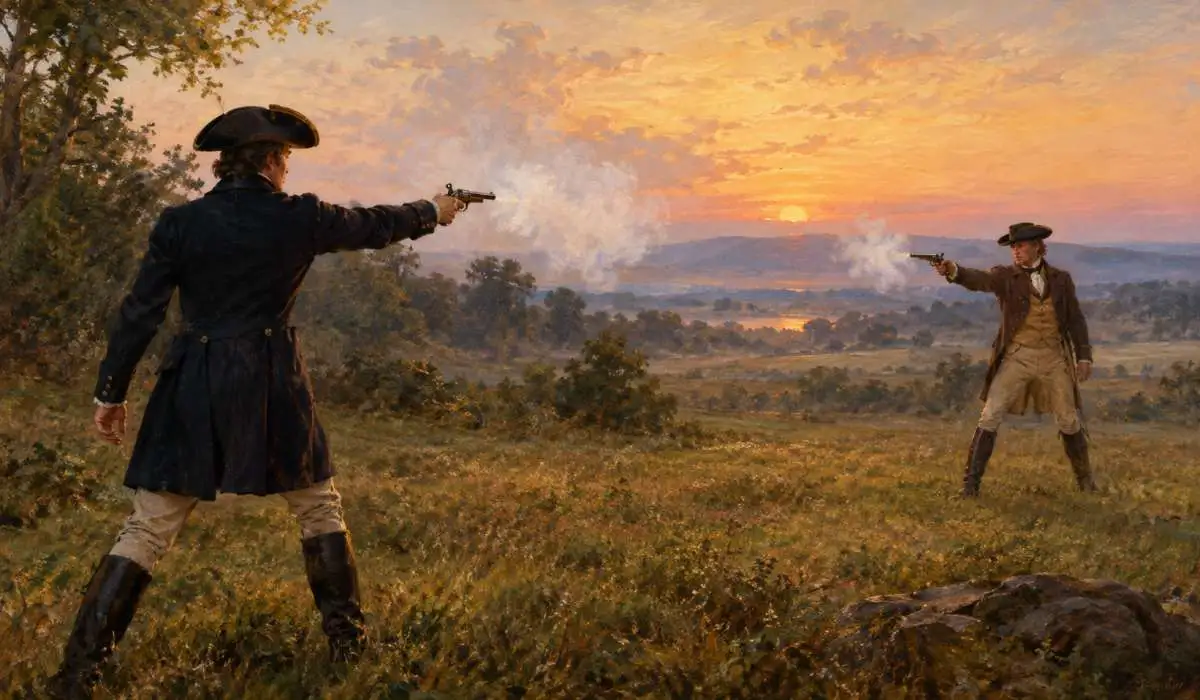
Historical duels were frequent events to maintain honour, to settle insults or personal disputes. However, not all of the duels started with a serious cause. Some began with joke and argument and even with some kind of flower competition and wager and even with some kind of flower disagreement. Some of the stories have become historical, others may have legends or information that is not fully documented.
These strange encounters reveal the extent to which people took matters of personal honor seriously back in the day, from scientists and writers and musicians to the likes of Abraham Lincoln and Andrew Jackson. Below are 20 duels allegedly fought over the strangest of excuses.
The Balloon Duel
The following narrative comes from a single newspaper account in 1808, and it is not improbable that it is more legend than authentic history. Two Frenchmen, de Grandpr and le Pique, engaged in the same ballet dancer at the Opera House at Paris and thought that an affair of any other kind was unworthy of their mettle.
Read More: Best Destinations for Gap Year Travel in South America 2026
The Astronomer's Nose
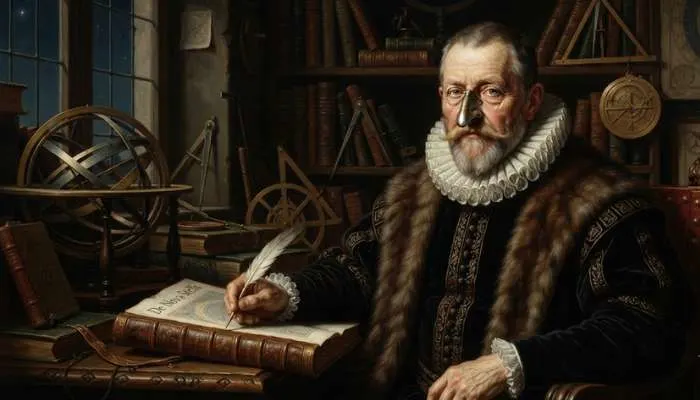
Brahe engaged in a duel to the death with a fellow Danish student at Rostock over who was the better mathematician. He fought Manderup Parsberg in 1566, his third cousin. He received a paper nose which he wore for the rest of his life and would become friends with Parsberg.
Lincoln and the Broadswords
Abraham Lincoln penned a nasty, sarcastic anonymous letter concerning James Shields, the Illinois state auditor. Once Shields learned Lincoln was behind the letter, he asked for a retraction and subsequently for a duel. Lincoln, as the party challenged, chose the weapons (the "cavalry broadsword of the largest size") and eventually allegedly hacked a branch off of a tree over Shields's head in an attempt to show the reach of his long arms. Their friends mediated before any violence could occur.
The Nineteen-Year Grudge
In 1801, they dispatched Dupont to bear bad tidings to Franois Fournier-Sarlovze. Franois was so offended by what he was told, he challenged the courier to a duel. They fought a duel in 1794, one every year and every other year for the next 19 years, always on foot or horseback, with sabres or pistols until Dupont prevailed and made him promise to never bother him again.
Bismarck and the Naval Budget
Bismarck convinced Virchow to issue a challenge to a duel after Virchow made a speech in 1865 quoting that Bismarck had, or had not, read a document on naval finance, and Bismarck challenged him to a duel over the statement.
The notorious account of Virchow and two sausages (one of them infected) dates to around 1900 and no one's ever been able to substantiate it but what actually happened was Virchow refused, and no one held that against him.
The Flower Arrangement
According to one report, Princess Pauline Metternich and Countess Anastasia Kielmannsegg dueling with rapiers in the tiny European principality of Liechtenstein in 1892 over the proper way to arrange flowers at a music exhibit in Vienna.
One attending doctor even proposed that they disrobe to the waist so that dirt on the fabric that was sewn into a wound would not cause infection. No primary sources ever verified any of these details, and Princess Metternich later claimed it was merely an Italian journalistic joke.
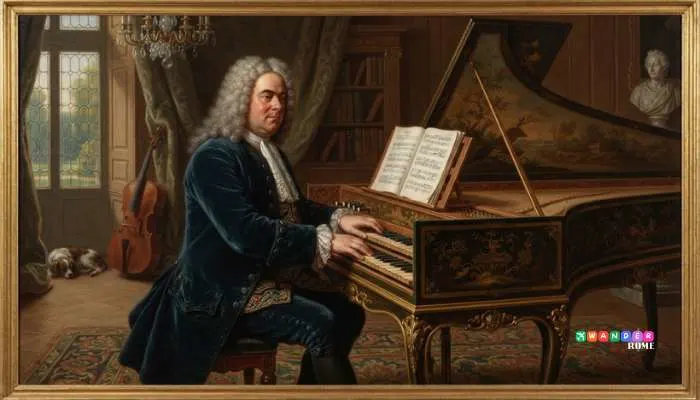
Handel and the Harpsichord
In Hamburg in 1704, Johann Mattheson completed singing his role in his own opera and then went to reclaim his regular spot at the harpsichord, where a young George Frideric Handel was playing.
They stepped outside and staged a swordfight in front of the theater. One of Mattheson's swords hit a metal button on Handel's coat and broke, or this would not be called Messiah.
Wellington Defends Himself
e Earl of Winchilsea publicly denounced the Duke of Wellington in an open letter for having a covert plan to bring Catholicism to England. Wellington, an incumbent prime minister and seasoned battle veteran of Waterloo, returned fire by daring the earl to a duel in 1829; Wellington missed, and Winchelsea shot into the air. He later issued a written apology.
The Horse Race Bet
In 1806, Andrew Jackson and Charles Dickinson disagreed during a wager on a horse race, which escalated into a conflict over insults to Jackson's wife. Dickinson issued a challenge, and he, being the better marksman, shot Jackson in the breast so near to his heart that the bullet remained permanently embedded. Jackson lived long enough to level his weapon and kill Dickinson
A Joke About an Outfit
Mikhail Lermontov poked fun at Nikolai Martynov's burly mountaineer's costume, complete with a giant dagger, in front of the company. But Martynov soon took offence and challenged him to a duel. An assailant shot Lermontov dead in 1841 at the age of 26, four years after he wrote his pithy poem about the death of Pushkin in a duel.
The Mathematician at Twenty
Variste Galois scribbled mathematical concepts the night before a duel in 1832, with a comment in the margin: 'I am running out of time'. He died in the duel at twenty, presumably over a woman, but even the specifics have never been sorted out. His work laid the groundwork for an entire branch of algebra.
You May Also Read: Affordable International Destinations for Us Travelers
A Postmaster Appointment
In 1826, Sam Houston served as a congressman when a fight over who should be named postmaster of Nashville escalated into a contest with a fellow named William White. But neither wanted the job, really. So Houston shot White in the groin. White, not surprisingly, survived and graciously made a remark about it.
FAQs
1. What were historical duels usually fought over?
Historical duels were commonly fought over insults, attacks on honour, personal disputes, romantic rivalries, political disagreements or challenges between rivals.
2. What is one of the strangest historical duels?
The reported “Flower Arrangement” duel is one of the strangest. Princess Pauline Metternich and Countess Anastasia Kielmannsegg were supposedly involved in a duel over how flowers should be arranged, although the story was later disputed.
3. Did Abraham Lincoln really fight a duel?
Abraham Lincoln challenged James Shields after an insulting anonymous letter caused a dispute. They prepared for a duel with broadswords, but their friends intervened before the fight became violent.
4. Were all these historical duels confirmed?
No. Some accounts are based on newspapers, later stories or disputed reports. The Balloon Duel and Flower Arrangement story, for example, have questions surrounding their authenticity.
5. Why were duels so common in history?
In many societies, especially among certain social and political classes, people viewed duelling as a way to defend personal honour after a serious insult or dispute.