
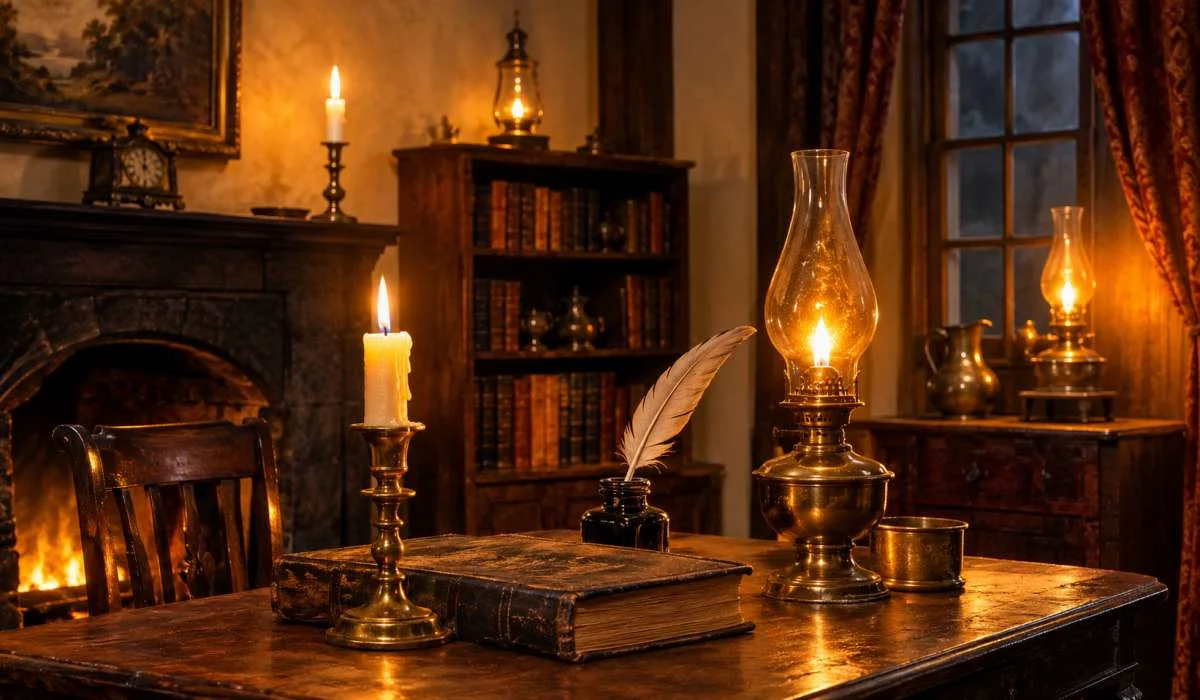
When electricity was not readily available, it was not always simple or safe to light a house after dark. The lighting of the rooms was through candles, oil lamps, grease, animal fat and others. Most of these traditional lighting techniques resulted in heavy smoke, foul odors and hazardous fires. Some were simple and low cost; others were expensive and utilized mostly by affluent families.
The dangerous ways people lit their homes before electricity reveal how people managed everyday life in the past. From rushlights to whale oil lamps, these methods show how much home lighting has changed over time.
Rushlights Burned Fast and Cost Almost Nothing
In 1789, naturalist Gilbert White described the miserly economics of the rushlight, one of the cheapest ways a home could be illuminated.
Someone made one of the pith of soft rushes, stripped of green bark, and immersed it in rendered bacon or mutton fat. A foot long stem, angled and fastened in an iron clamp, could sustain a fifteen- to thirty-minute burn time, after which it became a goner. Not expensive, mind, but you'd need several a night.
Read More: 20 Countries With Surprisingly Strict Tattoo Laws
Tallow Candles Meant Constant Wick-Trimming
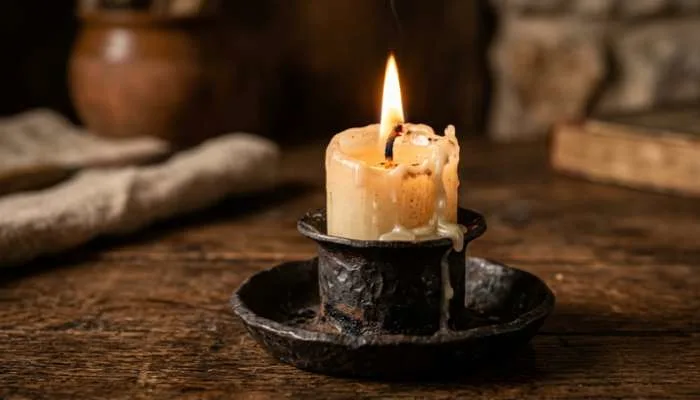
Tallow candles cost much less than beeswax and very common household candles. They have a wick dipped into tallow from sheep or cattle, and quickly, after a few minutes of burning, they stink up the room, drip everywhere, and belch out soot. They also require frequent snuffing of the wick with some shears (every 15-20 minutes) or the room fills up with smoke. No thanks!
The Betty Lamp Recycled Its Own Drippings
The Betty lamp probably took its name from the German word for "better" rather than from a lady called Betty, and it kept drips of fuel out of the waste. The wick channel sloped down into the grease catch, so you could burn off excess fuel without losing it. The Scottish Crusie lamp used two iron pots, one above the other, for the same purpose.
The Qulliq Did More Than Just Light a Room
More than 3,000 years ago, a crescent-shaped soapstone bowl known as a qulliq illuminated, provided heat, and melted snow for drinking water in each of the Inuit's centrally located snow lodges. A seal oil- or whale blubber-fueled lamp not only dried damp clothes but also heated the full home – powered by Arctic cottongrass wicks.
Slut Lights Were Rags, Grease, And Nothing Else
In times when the home's other fuel was in short supply, people used "slut lamps." This archaic English name, which referred to either rags or kitchen workers, was at that time bereft of its contemporary implications. The lamp itself could hardly have been less complex: a bowl of filthy kitchen fat and a scrunched-up rag for a wick.
Beeswax And Spermaceti Lit Only the Wealthy's Rooms
Beeswax candles could be burned brightly and almost without smoke, and had a honey smell, but were three to ten times more expensive than tallow candles. Also expensive were spermaceti candles, made from a waxy oil extract from sperm whales' heads. Hard and white, they would not slump at high temperature, and in Britain a standard unit of brightness was defined by their output. From other pungent and sticky sources, no wonder that something that worked better was wanted by the prosperous.
Whale Oil Lit Homes Until Whales Ran Out
To burn oil, they used a double-tube design of the lamp for whale oil, which at that time was quite thick, and the lamps designed to carry the heat down into the oil to keep it flowing.
Because of overhunting, the whales became more and more scarce, raising prices in the 1840s, and as whale oil became more and more scarce, Europeans used colza, a rapeseed oil used in some lamps, but the same viscous oil required a new design for it.
Horn Lanterns Kept the Wind From Winning
Prior to glass entering the popular choice for windows of a lantern, artisans could use cattle horn as a covering. The original spelling of lantern (lanthorn) shows that craftsmen could make a lantern window of cattle horn, cut thin and then softened by boiling.
Cattle horn was translucent and served as protection from the wind and wind-blown rain while still letting the light shine through. Makers can also use pierced tin lanterns to throw patterns of light.
You May Also Read: 20 of Historys Strangest Plane Disappearances That Remain Unsolved
Argand's Chimney Made Candlelight Look Dim
In 1780, Swiss physicist Aimé Argand designed a lamp with a hollow cylindrical wick that he lit between two metal tubes and topped by a glass chimney to funnel a mighty draft past the flame, providing air to both sides at once. It shone 6-10 times brighter than a candle and was smokeless. He filed a patent in England in 1784.
FAQs
Q1. How did people light their homes before electricity?
People used candles, oil lamps, rushlights, animal fat, grease lamps, and lanterns to light their homes before electricity became widely available.
Q2. What was the cheapest way to light a home before electricity?
Rushlights were among the cheapest lighting options. They were made from dried rush stems dipped in animal fat and provided light for a short time.
Q3. Why were old-fashioned candles dangerous?
Old-fashioned candles could cause accidental fires, produce smoke and soot, drip hot wax or fat, and require regular wick trimming.
Q4. What fuel did people use in traditional oil lamps?
People used different fuels, including whale oil, seal oil, animal fat, rapeseed oil, and other types of vegetable oils.
Q5. Which historical lamp provided brighter light than ordinary candles?
The Argand lamp was a major improvement in lighting technology. Its hollow wick and glass chimney produced a much brighter and cleaner flame than ordinary candles.