
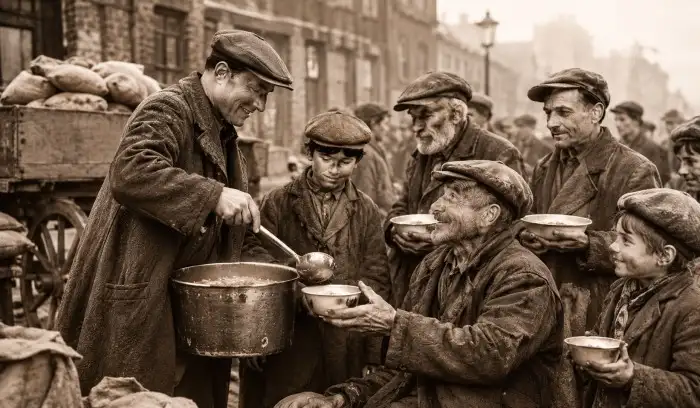
Clever ways people survived history's hardest times show how communities can overcome even the most difficult situations. I recall witnessing community pantries bloom all around us during the COVID-19 pandemic in 2020. Community members brought rice, canned food, produce, fruits, or anything they could give away to help families who lost their income to pandemic restrictions.
In a time when nearly everything felt hopeless, it was heartwarming to observe us coming together and caring for our neighbors. However, this was not the first time we shared our resources.
Philadelphia's Government Fled. Black Volunteers Stayed
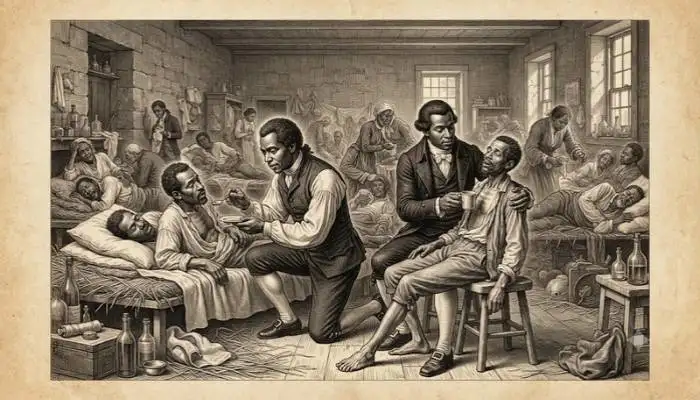
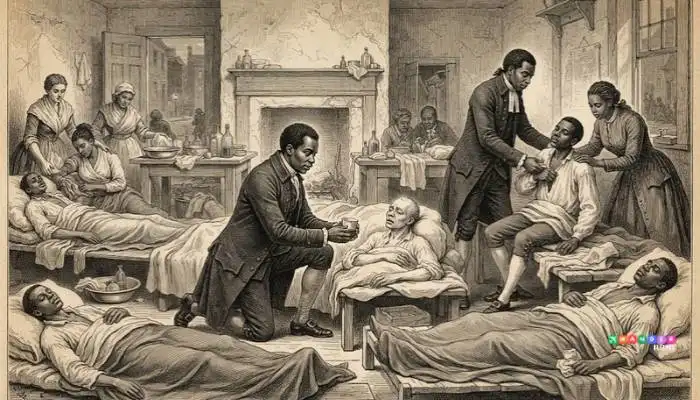
Dr. Benjamin Rush, who believed Black Philadelphians were immune to yellow fever, asked Richard Allen and Absalom Jones, heads of the Free African Society, to help care for yellow fever victims.
The Free African Society volunteers took care of the sick victims and buried the dead victims of the yellow fever epidemic at no charge. Rush was dead wrong; Black caregivers died at the same rate as white ones, and Black victims numbered more than 240. After Mathew Carey, the publisher, labelled Black volunteers as "profiteers," Allen and Jones published a detailed response denying the charge.
Read More: 20 Things You Wont Believe You Could Once Do at the Post Office
Farmers Turned Foreclosure Auctions into Theater
Starting in 1932, the Farmers' Holiday Association, led by Milo Reno, held standoffs at foreclosure auctions in 15 states to help distressed farmers hold onto their land. Over 70 penny auctions have been identified. At them, big, threatening mobs of farmers intimidated sometimes physically assaulted outsiders from bidding at auction.
They bid pennies for land, cattle and implements, and then returned it all to the owner. They essentially rigged the sale in favor of their neighbors! But once in Le Mars, Iowa, they escalated the violence and beat up the auctioneer.
Chicago Neighbors Carried Furniture Back Inside
When a bailiff dumped an evicted family's things onto the sidewalk, dozens of neighbors mobilized in response, and hundreds of neighbors showed up to bear all the belongings back inside. During 1931, Chicago's Unemployed Councils used this signal system to respond to the thousands of police evictions they faced on the South Side.
Sometimes neighbors really do have your back! After police killed three Black activists during a demonstration on Dearborn Street, Mayor Anton Cermak announced an interim ban on evictions on August 3.
At Weedpatch Camp, Migrants Governed Themselves
In 1935, the federal government established the Arvin Federal Camp (aka: Weedpatch Camp) in Kern County, California, as a home for Dust Bowl migrants. Its inhabitants ranged from 300 to 500, staying at a rate of a dime per day (or an equivalent in work), and they appointed their Community Council, which governed the camp, kept it clean, helped with chores and a library, and held weekly dances. The federal government "owned" it, but the residents operated it.
Detroit Housewives Shopped Where They Could Work
Detroit Housewives' League, which Fannie Peck founded on June 10, 1930, urged Black women to turn their consumer power into a weapon of economic warfare. "Don't Shop Where You Can't Work!" League members bought from companies that employed African Americans. By 1935, its 10,000 members pressured Detroit dairies, meatpackers, and retailers to employ Black managers and clerks.
Father Divine's 'Heavens' Ran on More Than Faith
While his disciples believed him to be the second coming of Christ, he founded the religious movement known as the Peace Mission, which also operated as a working economy. The Peace Mission operated more than 150 desegregated centers or "Heavens," most in Harlem, which offered decent housing and a fill-you-up, 15-cent meal, or meal-on-the-house for free.
Not only did they provide nourishment, though they also offered employment for out-of-work citizens in the cooperatively owned grocery stores, barbershops and coal yards.
You May Also Read: How to Romanticize Your Daily Life: Simple Everyday Joys
Eleven Immigrants and $95 Built a Lending Empire
Back in 1892, 11 Jewish immigrants pooled together $95 to start a loan society in New York. There are still signers to this day, with over 98 percent of the society's members paid off.
In accordance with biblical commandments that forbid the charging of interest on loans to those in need, the society has injected its $95 into hundreds of lives since its inception, over many generations.Instead of collateral, borrowers (beggars, artisans and those behind on rent) must come up with two community co-signers.
Excluded From Banks, They Built Their Own
Mexican-Americans, under the "Juan Crow" system, banded together into mutual aid societies, or sociedades mutualistas, throughout the Southwest to receive financial assistance that banks or government agencies could not provide.
Sociedad mutualistas such as La Alianza Hispano-Americana, for example, offered benefits including sickness, funeral costs, low-interest loans, legal defense to fight false deportations, and libraries with books in Spanish. Members raised the money to support this through little monthly membership fees.
FAQs
1. How did people help each other during difficult times in history?
People shared food, money, housing, jobs, and other essential resources to support families facing poverty and hardship.
2. What was mutual aid in history?
Mutual aid was a system in which community members supported one another through shared resources, financial assistance, healthcare, and other services.
3. How did communities survive during the Great Depression?
Communities created support groups, shared food, protected struggling farmers, helped evicted families, and developed local employment opportunities.
4. What was the role of community support during historical crises?
Community support helped people access basic needs, protect their livelihoods, find employment, and recover from difficult situations.
5. What can we learn from historical survival stories?
These stories teach us that cooperation, kindness, resource sharing, and standing together can help communities overcome major challenges.