
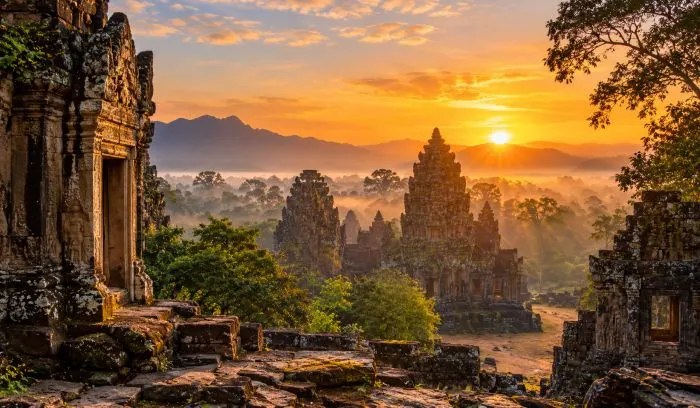
There is a lot of interesting history in the 20 forgotten Asian kingdoms that many don't know. Even before the formation of modern nations, strong kingdoms ruled great trade routes, constructed large temples, disseminated religious beliefs, and fostered thriving cultures in Asia.
Each of these civilisations made an impact on the region that it was part of, from maritime power of Srivijaya to the Buddhist centres of Khotan and the historic Kingdom of Pagan. Some kingdoms were able to prosper from trade; others through military strength and cultural influence. Explore these ancient kingdoms, understand how they came to be powerful and what happened to cause their fall.
Asia's Map Used to Look Very Different
Wish you knew about the historical kingdoms that shaped Asia before the borders of today took shape? You're about to discover the land of kings and kingdoms, during a time when the worlds of trade and power came first, and when some established mighty empires while others simply disappeared into history after more powerful enemies overran them.
Some names may ring a bell from old school books, while others barely made their way into the history books. But here's the thing: at their zenith, those 20 kingdoms truly shaped the world in profound ways.
Read More: Ancient Ruins Around the World You Must See
The Kingdom of Srivijaya
Envision a period when Srivijaya reigned as the master of the seas! From about the seventh century, this formidably great force emerged from the region of Sumatra. What factors enabled them to achieve this?
Considering this is the dominance of shipping through the Strait of Malacca supplied its rulers with an enormous advantage, linking the Indian Ocean and the South China Sea. But Srivijaya also served as a vibrant center of Buddhist scholarship, until powerful regional competitors rose to prominence.
The Kingdom of Champa
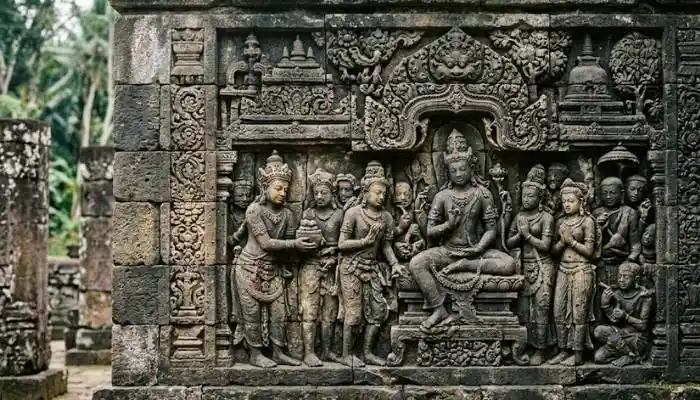
Did you know that for centuries, the ancient Champa kingdom exerted control over much of the coastal regions of what is now central and southern Vietnam? Strategically positioned for ocean trade, the people of Champa became prosperous from their trade activities, building amazing Hindu temples that beautifully reflected Indian influence.
Do you want to know why this once-thriving civilization disappeared? Champa warriors fought off a long list of rival Vietnamese and Khmer states but ultimately slowly fell to the encroaching power of Vietnam.
The Dvaravati Kingdoms
Here's something you didn't know: long before the popular Thai kingdoms emerged, the Mon people established themselves in Thailand during the Dvaravati period. Beginning around the 6th century, you would spot these people actively developing Theravada Buddhism and thriving in prosperous cities that were connected by trade routes. What's interesting is that their form of government remains a little hazy, but their culture and influence are very clear and unmistakable. What about it did you not expect?
The Pagan Kingdom
Ever pondered on the wealth of the Pagan Kingdom? Just take a look at the numerous temples that historians and archaeologists have scattered throughout present-day Bagan. Beginning in the 11th century, the rulers of the kingdom integrated most of Myanmar under a single political dominion and elevated Theravada Buddhism to be central to the state's culture.
The problem was that by the end of the 13th century, the royal authority faced significant weakening as it battled against the Mongol onslaught and internal unrest.
The Kingdom of Lan Xang
Did you know? We call this country Laos, but a long time ago in the 14th century the people referred to the country as Lan Xang, which means "the Kingdom of a Million Elephants." Yep, that “kingdom of a million elephants” was indeed a real thing, and yes, you’ve guessed it; the reason they called it that is because warriors used elephants in combat there! So, what came of this once-great kingly kingdom?
The Sukhothai Kingdom
Have you ever thought about the kingdom that initiated the grand history of Thailand? Sukhothai may not be as glorious as Ayutthaya, but it remains no less important.
Its kings ruled over Southeast Asia throughout the 13th and 14th centuries, during which they fostered a unique local art style and supported Theravada Buddhism. And while Ayutthaya expanded rapidly, Sukhothai gradually lost its autonomy and merged into other regions.
The Kingdom of Mrauk U
Have you ever pondered the little-known historic treasures? Just out of the western corner of contemporary Myanmar, you can find Mrauk U, the rich kingdom that surrounded the port city with closer links to the Bay of Bengal.
That's it; the rulers of the kingdom, from the 15th to the 17th centuries, controlled important trade routes and preserved cultural links to Bengal and Southeast Asia. Still, the huge stone temples remain, indicating that it was not just a single independent coastal state.
The Kingdom of Khotan
Just curious about what factors made Khotan so significant on the ancient Silk Road? A lush oasis kingdom located on the southern rim of the Taklamakan Desert, Khotan became famous for its jade, exquisite textiles, the spread of Buddhism, and its crucial role in bridging trade routes between China and Central/South Asia.
Though it often had to contend with forceful neighbors throughout its history, Khotan ultimately survived until the 11th century.
You May Also Read: Extraordinary Ancient Egyptian Finds From Recent Times
The Kingdom of Qocho
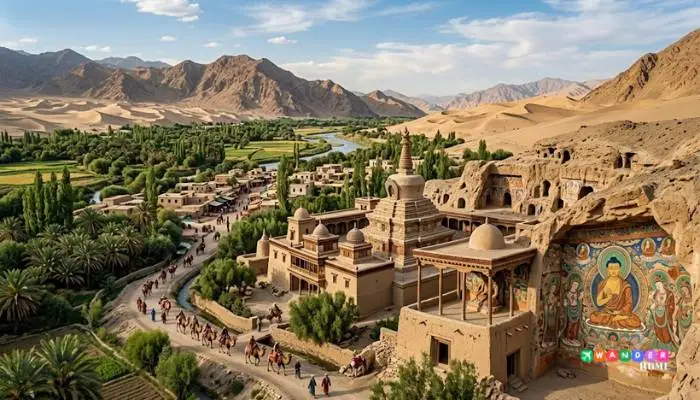
Ever thought how these kingdoms in the ancient world managed to survive amidst giant empires? The Uyghur Kingdom of Qocho stands out as an interesting case in point.
Following the collapse of the Uyghur Khaganate in the ninth century, a new kingdom emerged in the oasis cities of Turpan, as its strategic location along critical trade routes allowed it to engage with multiple traditions, including Buddhist, Manichaean, Christian, and others. But how did this resilient kingdom manage to survive for centuries? It thrived by skillfully balancing relations with its mighty neighbors until it ultimately found its place within the ever-growing Mongol world.
FAQs
1. What were the most powerful ancient kingdoms in Asia?
Some influential ancient Asian kingdoms included Srivijaya, Champa, Pagan, Sukhothai, Lan Xang, and Khotan. They shaped regional trade, religion, politics, and culture.
2. Why did many Asian kingdoms disappear?
Many kingdoms declined because of wars, invasions, political conflicts, changing trade routes, and the rise of stronger neighboring states. Some were absorbed into larger kingdoms rather than disappearing completely.
3. What was the Srivijaya Kingdom famous for?
Srivijaya was a major maritime power based around Sumatra. It controlled important sea trade routes and became a respected center of Buddhist learning.
4. Which ancient kingdom existed in present-day Myanmar?
The Pagan Kingdom, also known as the Bagan Kingdom, unified much of Myanmar and supported the growth of Theravada Buddhism. Its legacy remains visible in Bagan's historic temples.
5. What can we learn from forgotten Asian kingdoms?
These kingdoms help us understand ancient trade, cultural exchange, religious traditions, architecture, and political change. Their history also shows how civilizations influenced one another across Asia.