
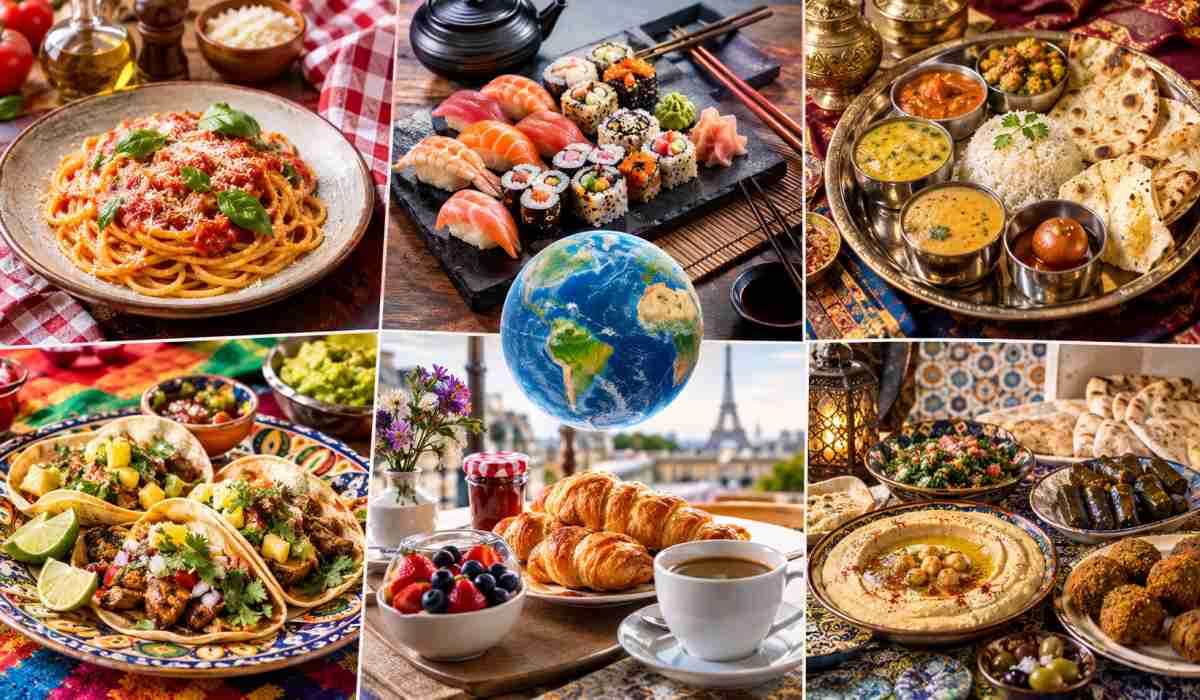
You've got the dish you've ordered while dining abroad - but that's only half the story. You should follow a proper way to eat your meal. No matter where you're from, every culture has unusual dining etiquette rules.
Some people hand down these rules from old traditions, some show respect to the chef, and some follow religious or local customs. A perfectly normal gesture here in the states could offend in another country. Let's look at five of the most interesting eating etiquette rules from around the world.
Unusual Dining Etiquette Rules You Should Know Before Travelling
Every country has its own food traditions and table manners that may surprise visitors. Here are five unusual dining etiquette rules from around the world that every traveller should know before enjoying a meal abroad.
India
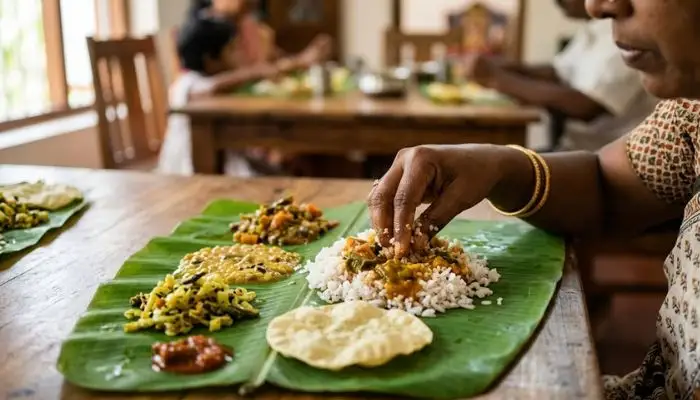
In numerous aspects of India, eating with your right hand is a way of life. Ever since ancient times, people have considered the left hand unclean. As such, Indians have reserved it for personal hygiene purposes, eating, and passing food to others.
Although in the large cities and fine dining establishments, restaurants widely use cutlery, many Indians remain quite accustomed to using their hands when eating, particularly foods such as rice, curries, and roti, feeling that it offers a better experience. When dining at someone's house, eat solely with your right hand.
Read More: Unusual Crisp Flavours That Sound Strange but Taste Good
France
Another French tradition from centuries ago is the taboo on cutting salad leaves with a knife at the table. At that time, silver and carbon-steel knives would tarnish in contact with the acid of a vinaigrette, while the reaction could spoil the flavour of the dressing, as well as its effect on the colour of the steel.
Then, people believed that cutting your lettuce meant the cook hadn't washed and prepared it properly. Thanks to stainless steel, this is no longer an issue - though the custom still holds in a proper French restaurant - whereas in everyday life it's unlikely anyone will be concerned if you pick up your knife.
Portugal
In Portugal, grabbing the salt or pepper shaker without even tasting your food insults the chef. You're saying that you've already decided the meal needs something, even though you haven't tried it yet.
So it's wise to take a bite before you reach for the salt or pepper. If you decide you could still use a little more salt or pepper after tasting the food, go right ahead and ask for it—your waitress will know where you're coming from.
Japan
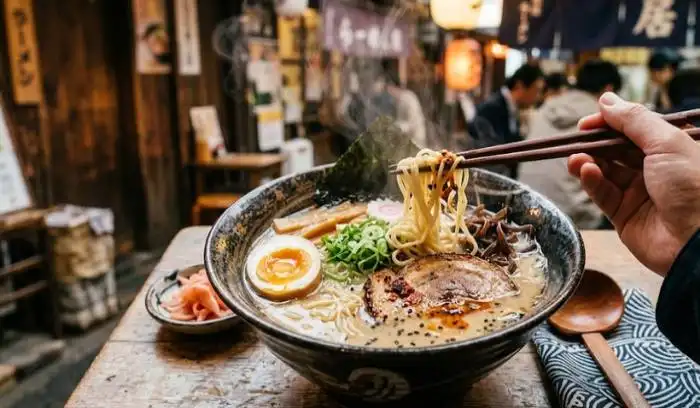
Slurping may be considered rude in several countries. In Japan, it's encouraged. Both when eating ramen or soba or udon, people do not only use slurping to cool their hot noodles, but it may also make their noodles seem more flavorful.
Many believe that the sound of one's slurp shows that one is having fun and enjoying the meal. However, it is not an absolute rule. Foreigners don't seem rude if they eat quietly, but they don't cause a disturbance if they happen to slurp.
Italy
If you order a cappuccino with your pizza or pasta dish in Italy, you might receive some strange looks from the locals. Italians typically drink milk-based coffees only in the morning. After lunch or dinner, waitstaff will serve you espresso, as drinking milk after a large meal is not a common practice for Italians.
However, there exists one beautiful exception: In Liguria, the coastal region of Italy close to Genoa, people have enjoyed eating a slice of bread soaked in cappuccino for breakfast for a long time, and it has become a much-loved regional delicacy.
China
The largest Chinese cities include the People's Republic of China and Beijing, which has a population of 21 million. Over 1/3 of the world's population has historically struggled with providing enough food for its huge population. As people found meat scarce and expensive, they added it sparingly to the rice and vegetables that were more plentiful.
A Chinese family's typical home-cooked meal features a round table for dining, and no one can sit in a corner since its circumference symbolizes friendship.
Australia
Biggest island, smallest continent and the most successful multicultural society, welcoming a vast range of people, cultures, beliefs and lifestyles. Over 3 million Australians born overseas speak a language other than English at home. This translates into an incredible variety of food and hospitality.
Australians love the outdoors, barbecues and the great outdoors – no matter where you are in the country. With a 'shrimp on a barbie' and a Fosters in hand, you're in for a good old Aussie experience.
You May Also Read: Genius Air Fryer Recipes and Hacks for Easy Cooking

Don’t “cheers” drinks in Hungary
To clink our glasses in a traditional pub, and if someone is not part of the cheers, they become the strange one, the awkward one, or the person left out of the toast. Well, it turns out that skipping the 'Cheers' in Hungary might just save you a scolding.
This tradition of no clinking dates back to 1848, the period when the Austrians suppressed a rebellion in Hungary. They celebrated the executions of the Hungarian rebels by loudly clinking their beer glasses together. Some say the Hungarian "no clinking" vow only meant for 150 years (which would have ended in 2000), but others continue the tradition today in Hungary.
FAQs
1. What are unusual dining etiquette rules around the world?
They are local food customs that may seem surprising to visitors, such as eating with the right hand in India or slurping noodles in Japan.
2. Why do Indians eat with their right hand?
In many Indian communities, the right hand is traditionally used for eating because the left hand is associated with personal hygiene.
3. Is slurping noodles polite in Japan?
Slurping noodles is widely accepted in Japan and can show enjoyment, although it is not compulsory and customs vary by setting.
4. Why do Italians usually avoid cappuccino after dinner?
Milk-based coffee is traditionally associated with breakfast in Italy. Espresso is a more common choice after lunch or dinner.
5. Why do some Hungarians avoid clinking beer glasses?
The custom is linked to a historical story about Austrian celebrations following the suppression of the Hungarian Revolution of 1848. Some people still follow the tradition, while others do not.